

What Is IPTV Streaming and How It Works
- Clinton Providence
- Jun 26
- 5 min read
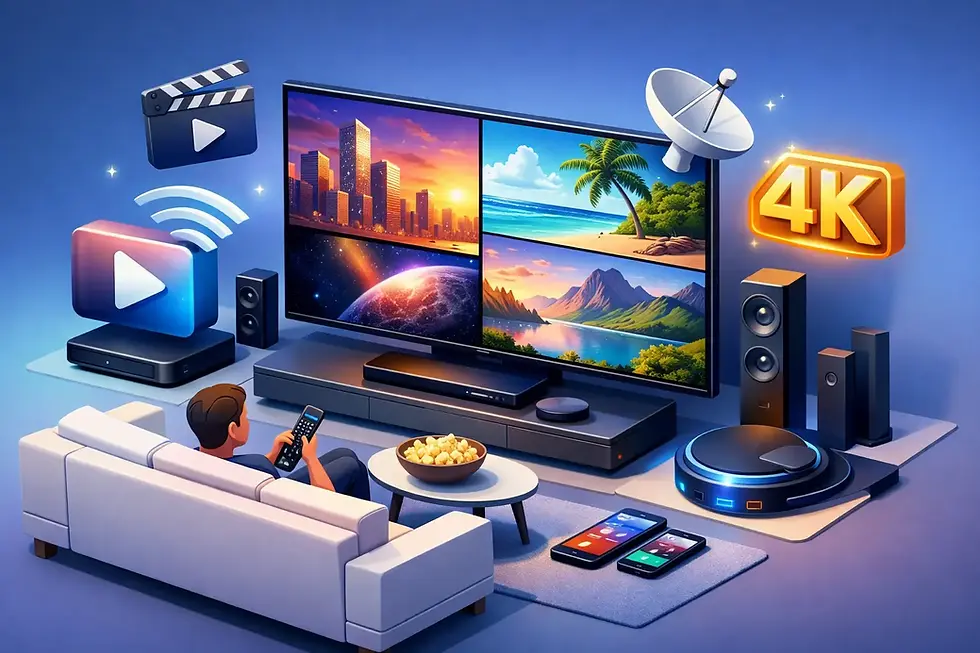
You have probably seen the term and wondered if it is just another name for watching telly online. Fair question. What is IPTV streaming, exactly? Put simply, it is television delivered over the internet instead of through a traditional cable or satellite setup. That means live channels, sports, films, series, kids content and even radio can be streamed through an app on your Smart TV, mobile phone, tablet or laptop, without the usual box under the television.
That simple shift changes a lot. IPTV gives viewers more freedom, more device choice and less dependence on old hardware. For households that want live TV and on-demand entertainment in one place, it is a smarter and more flexible way to watch.
What is IPTV streaming?
IPTV stands for Internet Protocol Television. In plain English, that means TV content is sent through your internet connection rather than through the older systems used by cable and satellite providers.
Instead of relying on a fixed cable line into one room, IPTV lets you stream content through compatible devices across your home and, in many cases, while you are away from it. You open the app, choose what you want to watch, and start streaming. No waiting for an engineer. No bulky setup. No need to build your viewing around one screen.
There are usually three main types of content within an IPTV service. The first is live television, which works much like normal broadcast TV except it arrives through the internet. The second is on-demand content, such as films and series that you can start when you like. The third can include catch-up features or replay options, depending on the service.
That is why IPTV feels familiar and modern at the same time. It still gives you channels and scheduled programming, but it delivers them in a way that fits how people actually watch now.
How IPTV streaming works in practice
At the user level, IPTV is straightforward. You sign up, log in on your device, and stream content over your broadband or mobile data connection. Behind the scenes, the provider delivers video data using internet protocols designed to carry media efficiently.
The quality of the experience comes down to a few things. Your internet speed matters. The quality of the app matters. The provider’s infrastructure matters too. A well-built service should load quickly, play reliably and work across a range of devices without turning setup into a chore.
This is where the difference between services becomes obvious. Not every IPTV platform performs the same way. Some are unstable. Some are confusing to use. Some offer plenty of channels but a weak viewing experience. A strong IPTV service focuses on both content and delivery, because viewers do not just want choice. They want it to work properly.
IPTV vs cable: what really changes?
For many families, the real question is not just what IPTV is, but whether it is better than cable. In many cases, yes. But it depends on what matters most in your household.
Cable is familiar, but it can be rigid. It often means fixed installation, extra hardware, long contracts and limited flexibility when you want to watch on different devices. IPTV cuts through a lot of that. It is built for app-based viewing, quicker setup and more mobile access.
If your household watches across several screens, IPTV has a clear edge. One person can be watching live sport in the sitting room while someone else catches up with a series on a tablet. Children can watch their favourites on another device without taking over the main television. That kind of flexibility is now expected, and traditional cable has been slow to match it.
There are trade-offs, though. IPTV depends on your internet connection. If your broadband is weak or inconsistent, your stream can suffer. Cable can feel more stable in homes with poor internet. That said, for households with decent broadband, IPTV is often the more modern and cost-effective choice.
Why IPTV suits modern family viewing
The old way of watching TV assumed one screen, one room and one schedule. That is no longer how most people live. Families want choice, speed and convenience. They want local channels, international entertainment, live sport, children’s programming and films in one subscription that makes sense.
IPTV is built for that demand. It brings live and on-demand content together in a single platform. It supports multiple devices. It removes the clutter of outdated equipment. It also makes it easier to keep your viewing connected to home, especially for Caribbean audiences who want both regional familiarity and broader entertainment options.
That matters. Plenty of people do not want to juggle separate apps for sport, kids content, films and live TV. They want one reliable service that covers the full household. A platform like CBTV is designed around exactly that reality, giving families a simpler alternative to expensive, restrictive TV packages.
Is IPTV legal and safe?
This is where people need to be careful. IPTV itself is completely legitimate as a technology. Many trusted providers use it to deliver licensed television and streaming content over the internet.
The issue is not the format. The issue is the provider. Some services operate without proper rights or offer suspiciously huge channel lists for unrealistically low prices. That can lead to poor reliability, weak support and potential legal risk for users.
A proper IPTV service should be transparent, stable and professionally run. It should clearly explain what you are getting, what devices are supported and how support works. If a service feels vague, constantly changes names or promises everything for next to nothing, that is usually a red flag.
What you need to use IPTV
Most people need less than they think. In general, you need a stable internet connection, a compatible device and an active subscription. That is it.
A Smart TV is often the easiest option for home viewing, but mobile phones, tablets, laptops and web browsers are commonly supported as well. Some users prefer a streaming stick or Android box, though many modern services are built to work without extra hardware.
Internet speed matters, but not in a dramatic way. Standard streaming can work fine on modest broadband, while HD or multiple simultaneous streams will benefit from stronger speeds. If several people in the house are online at once, from streaming to gaming to video calls, a better connection will help keep things smooth.
Who should choose IPTV streaming?
IPTV is a strong fit for people who want live TV and streaming convenience without being tied to a traditional cable model. It suits households that watch on multiple screens, want quick access to sport and entertainment, and prefer subscriptions that feel flexible rather than locked in.
It is also a smart choice for viewers who want content that reflects where they are from, not just what the biggest international platforms decide to push. That local connection can make a real difference. News, regional channels and radio still matter, especially when you want entertainment and familiarity in the same place.
On the other hand, if your home has unreliable internet and no easy way to improve it, IPTV may not give you the experience you want. The service can only be as strong as the connection carrying it. For most connected households, though, that barrier is shrinking fast.
What is IPTV streaming really offering?
At its best, IPTV is not just a different delivery method. It is a better viewing model. It gives you live television without the baggage of old cable systems. It gives your household more control over where and how you watch. And it puts entertainment, sport, kids content and local favourites in one place instead of scattering them across multiple platforms.
That is why IPTV keeps gaining ground. It matches modern habits. It reduces friction. It gives viewers more for their money when the service is built well.
If you have been asking what is IPTV streaming, the clearest answer is this: it is television redesigned for the way people watch now. Choose a reliable provider, make sure your internet can handle it, and you get a faster, simpler path to the content your household actually cares about. That is not hype. That is where television has already moved.


Comments